
Gold Mine Defender
yuegameStrategy
4.176.00 Reviews
- Version
- 2.7
- Installs
- 100.00K
- Age Rating
- Everyone
Screenshots
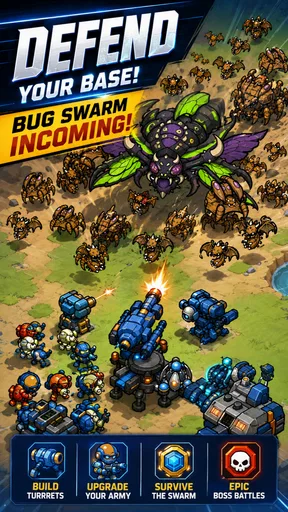

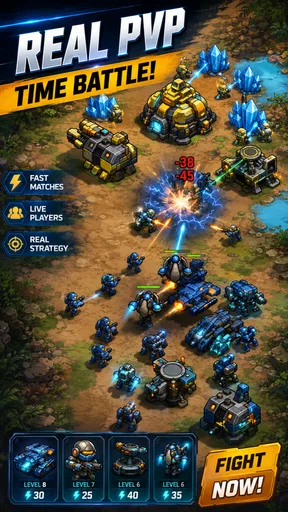
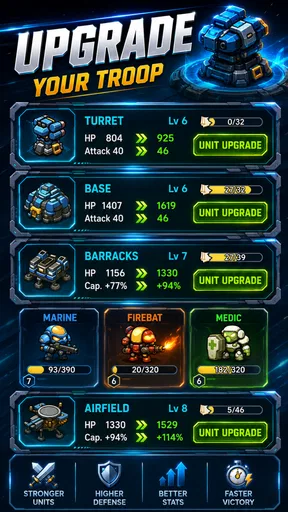
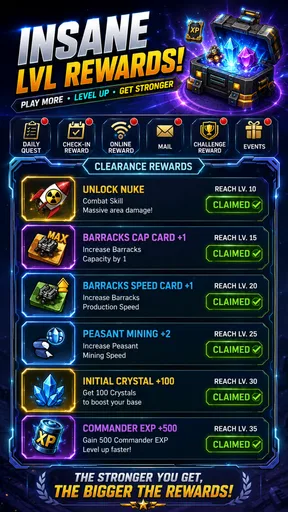
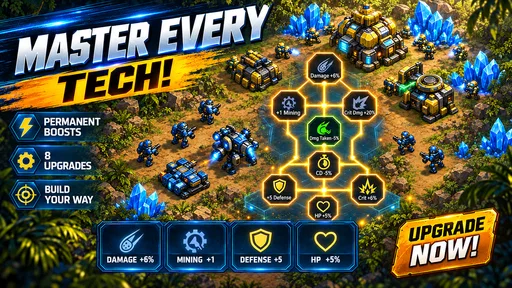


Our Review of Gold Mine Defender
 Analysis by Appyee
Gold Mine Defender is a strategy game built around a simple pressure point: your gold mine needs protection, and every decision has to balance immediate danger against longer-term control. I found the appeal in that clear objective. There is no need to learn a large fictional universe before playing; the central idea is easy to understand, while the defensive choices give the experience enough room for thoughtful play.
After spending time with it, I see this as a free, accessible option for players who enjoy compact defensive challenges rather than sprawling strategy campaigns. It is developed by yuegame, carries an Everyone age rating, and runs on Android 7.0 or later. The current version is 2.6, so it is aimed at a wide range of older and newer Android devices. That broad compatibility is useful, although it also means expectations should stay realistic: this is better approached as a focused mobile game than as a full-scale strategy simulation.
What the mine-defense idea feels like in practice
The strongest part of the design is the way the gold mine gives every action a purpose. In many strategy games, the opening minutes can feel like routine preparation. Here, the mine creates a natural reason to think ahead. I was not simply building for the sake of building; I was trying to protect an asset that made every mistake feel meaningful.
That structure makes the game easy to pick up during a short break. I can imagine opening it while waiting for transport, playing through a focused session, and putting it down without needing to remember a complicated story or a large collection of unrelated objectives. At the same time, the defensive premise gives it more involvement than a completely passive time-killer.
The important distinction is that this is a strategy game, not an action game disguised as one. Players who enjoy planning, prioritizing threats, and deciding where limited attention should go will probably get more from it than players looking for constant direct control. The satisfaction comes from making a sound defensive choice and seeing that choice hold up under pressure.
That also explains why the game may not suit everyone. If your ideal mobile experience is a fast reflex challenge, a deep competitive battlefield, or a long role-playing adventure, the mine-defense format may feel narrow. I would choose it for its focused loop, not because it tries to replace every other type of strategy game.
How quickly it gets to the point
The short description, “Gold Mine Defender,” tells you the basic role immediately, and the store summary focuses on defending the mine. That clarity matters for perceived speed. A game that communicates its purpose quickly feels faster to learn, even when the decisions themselves require care. I did not need a long explanation to understand what I was supposed to value.
For a new player, my advice is to resist the temptation to treat every defensive choice as equally urgent. The mine is the priority, but not every possible improvement deserves attention at the same moment. I found the experience more comfortable when I first considered the immediate danger, then looked at what would make the next threat easier to handle. That simple order prevents the opening from becoming a rush of unfocused taps.
The game’s speed is therefore best judged in two ways. It feels approachable because the objective is direct, but it can still demand deliberate thinking once several concerns compete for attention. That combination is a good fit for mobile play: the entry barrier is low, while the decisions are not entirely automatic.
One useful habit is to pause mentally before committing to a defensive move. Even if the interface encourages quick action, a few seconds spent asking “what threatens the mine next?” can be more valuable than reacting to the most visible problem. This is one of the less obvious strengths of the concept: it rewards prioritization rather than frantic activity.
What happens during heavier play
The busiest moments are likely to be the points where several defensive demands arrive close together. Those situations are where a simple strategy game proves whether its core loop has substance. In my experience, the pressure does not come from a huge amount of content on screen; it comes from having to choose what deserves protection first and what can wait.
That creates a useful trade-off. Spending too much attention on one area can leave the mine exposed elsewhere, while spreading attention too thin can make every response ineffective. I liked that tension because it makes defensive planning feel purposeful. The best approach is not always the most aggressive one. Sometimes preserving stability is more valuable than chasing a quick improvement.
For everyday use, this makes the game particularly suitable for players who prefer sessions with a clear mental endpoint. You can approach a round with a small plan: establish a safe position, watch for the first serious pressure, and adjust only when the situation demands it. That workflow is more satisfying than tapping randomly, and it also reduces the feeling that progress depends on luck alone.
A practical tip is to avoid making several changes at once when the mine is already under pressure. If the result is poor, you will not know which decision caused the problem. Changing one priority, observing the outcome, and then making the next adjustment gives you a better understanding of the game’s rhythm. This is the kind of methodical play that a generic store description would not explain, but it makes the strategy easier to read.
Stability, recovery, and the cost of a mistake
Reliability is not only about whether a game opens. For a strategy title like this, it also involves how clearly the game lets you recover from a bad decision. A defensive mistake should teach you something rather than leave you confused about what went wrong. I found the mine-centered objective helpful here because it gives the player a concrete point of reference: if protection failed, the next attempt can focus on the timing or priority that was mishandled.
I would still recommend playing with a calm mindset. The game is less appealing if you expect every attempt to be perfectly predictable. Defensive strategy often involves adapting after an unexpected turn, and that can feel like friction when you are looking for a purely relaxing experience. On the other hand, players who enjoy learning through repeated attempts may see that friction as part of the challenge.
Recovery also depends on how you use short sessions. If you stop immediately after a mistake, the experience may feel unfinished. I prefer taking a moment to identify the specific failure before trying again. Was the mine left vulnerable while attention went elsewhere? Did I react too late? Did I invest effort in a lower-priority concern? Turning the loss into one clear lesson makes the next session more useful.
The game’s broad Android support is encouraging for people using older hardware, but compatibility should not be confused with identical performance on every phone. Devices differ in memory, background activity, screen response, and available storage. I would close unnecessary apps before a longer session, especially on an older handset, not because the game is confirmed to be demanding, but because mobile multitasking can affect any interactive title.
Older phones, newer devices, and sensible expectations
Gold Mine Defender is free, which lowers the risk of trying it. The minimum operating-system requirement is Android 7.0, making it available to a substantial range of devices. That is a practical advantage for families or users who do not replace phones frequently. The Everyone rating also makes the game easy to consider for a broad audience, although parents should still use their own judgment about play habits and screen time.
On a newer phone, I would expect the main benefit to be comfort rather than a radically different game. A responsive screen and a clean multitasking environment can make defensive decisions feel smoother, but they do not change the underlying strategy. On an older phone, the more important question is whether switching between apps or running background processes affects responsiveness. If the device is already struggling with ordinary tasks, closing other apps before playing is a sensible first step.
Resource demands are difficult to judge from the basic product information alone, so I would not describe the game as either exceptionally light or unusually heavy. The safer conclusion is that its focused mobile design should appeal to people who want a manageable strategy experience, while device-specific performance still depends on the phone. If your handset is close to the minimum operating-system requirement, keeping expectations modest is wiser than assuming a flagship-level experience.
There is also a screen-size consideration. On a compact display, defensive information may require more careful attention, particularly during busy moments. A larger screen can make the play area easier to read, but it will not automatically improve decision-making. Players who value visual clarity should try a short session first and see whether the controls remain comfortable when the mine needs urgent protection.
How it compares with familiar strategy alternatives
Compared with large tower-defense games, this title’s appeal is its narrower focus. A larger alternative may offer more units, maps, upgrades, narrative content, or long-term progression. That can be better for players who want a substantial campaign and many systems to master. Gold Mine Defender makes more sense when you want the central defensive question without committing to a much larger package.
Compared with idle mining games, the emphasis is also different. Idle games usually make the resource itself the main reward, encouraging gradual accumulation with limited active decision-making. Here, the mine is something to protect, so its value creates pressure rather than simply measuring passive growth. I would choose this game when I want to stay mentally involved instead of checking progress occasionally.
Compared with real-time competitive strategy games, it should be easier to approach casually. You are not choosing it for a large player-versus-player ecosystem or for the social pressure of matching another human opponent. That is a strength for someone who wants private, self-paced play. It is a weakness for anyone who needs competition, rankings, or a constantly changing multiplayer environment to stay interested.
The most important trade-off is depth versus convenience. A focused mine-defense game can be easier to understand and quicker to start, but it may not provide the variety of a major strategy release. I would recommend trying it before committing to a more demanding alternative, especially if you are unsure whether you enjoy defensive planning at all.
Who will get the most from it
I think the best audience includes casual strategy players, people who enjoy protecting a valuable objective, and Android users looking for a free game that can fit between daily tasks. It is also a reasonable choice for someone returning to strategy games after a long break, because the mine gives the experience a clear anchor. You can concentrate on one central responsibility instead of learning a large collection of systems at once.
A realistic everyday scenario would be a short evening session after work or study. Rather than starting a complex campaign that demands a long uninterrupted block, you could open the game, assess the mine’s immediate needs, and play with one defensive goal in mind. If the session ends in a mistake, you can identify the weak decision and return later with a more focused plan. That makes the game easier to fit into an unpredictable schedule.
I would skip it if you need a story-driven experience, sophisticated multiplayer, or a huge amount of content from the first installation. I would also be cautious if you dislike repeating defensive situations to improve your approach. The game’s value comes from the mine-defense loop, so players who find that loop repetitive will not be rescued by unrelated features.
The public response gives some useful context without settling the question for every player. It has a 4.1 average from around 327 ratings, with roughly 24 written reviews and over 10K installs. Those figures suggest that it has attracted a modest audience and generally positive interest, but they are not a substitute for deciding whether its focused style matches your taste.
What version and access mean for a new player
The current version is 2.6, and the game is free to install. That combination makes it straightforward to test without first making a financial commitment. I would use the first few sessions as a compatibility check: see how comfortable the controls feel, whether the mine remains readable during pressure, and whether the game’s pace suits the amount of attention you want to give it.
The developer, yuegame, has kept the product identity simple and easy to understand. For a new player, that means the best way to evaluate it is not by comparing feature counts with large strategy franchises, but by asking whether the central defensive task remains enjoyable after the initial novelty fades. If protecting one valuable target still makes you think and adjust, the game is doing what it set out to do.
My strongest practical recommendation is to play deliberately rather than rapidly. Establish a priority, observe what threatens it, and change one thing at a time. This approach helps with both strategy and performance perception: fewer rushed inputs make the game feel more controlled, while a clean device setup gives you a fairer impression of responsiveness.
Final performance verdict
Gold Mine Defender works best as a focused, free strategy game for Android users who want a clear objective and manageable sessions. Its gold-mine premise gives defensive decisions a reason, and the broad Android 7.0 support makes it approachable on older hardware as well as newer phones. I appreciate that it does not need to pretend to be a massive strategy platform to be worthwhile.
Its limitations are tied to the same focus that makes it accessible. Players seeking expansive campaigns, deep simulation, or competitive multiplayer should look toward a larger alternative. People with older or busy devices should also judge comfort on their own handset rather than assuming every phone will behave identically.
My recommendation is positive but specific: try it if you enjoy protecting objectives, learning from defensive mistakes, and making careful choices in short sessions. The key trade-off is simple: you get an approachable mine-defense experience, but not the breadth of a full strategy suite. For the right player, that restraint is exactly what makes the game easy to return to.
Verdict
Strengths of Gold Mine Defender
- Simple controls make it easy to start playing immediately.
- Short levels fit well into quick gaming sessions.
- Mining and tower defense create an entertaining gameplay mix.
- Bright visuals make enemies and resources easy to identify.
- Playable without requiring advanced gaming experience.
Limitations of Gold Mine Defender
- Gameplay may become repetitive after extended sessions.
- Difficulty can feel uneven between certain levels.
- Some upgrades may require considerable time to unlock.
- Small screens can make precise actions more difficult.
- Limited variety may reduce long-term replay value.
Similar Picks in This Category
View All
Clash of Clans
Supercell4.5

Plants vs. Zombies™
ELECTRONIC ARTS3.7

Lords Mobile: Kingdom Wars
IGG.COM4.5

Clash Royale
Supercell4.4

State.io — Conquer the World
CASUAL AZUR GAMES4.1

Car Driving School : Car Games
Spark Game Studios3.9
Frequently Asked Questions
What is Gold Mine Defender and how does the gameplay work?
Gold Mine Defender is a strategy and tower-defense game in which you protect a valuable gold mine from waves of enemies. After installing and playing it, users can expect to place defensive units, improve their abilities, and manage resources during increasingly difficult stages. Success depends on choosing suitable defenses, reacting quickly to enemy attacks, and planning upgrades rather than simply tapping through each level.
Is Gold Mine Defender free to download and play?
Gold Mine Defender can generally be downloaded without an upfront purchase, but the exact monetization model may vary depending on the Android or iOS version available in your region. The game may include advertisements, optional in-app purchases, or paid items that help with progression. Before downloading, check the store listing for current pricing, supported payment methods, and whether purchases can be restricted through your device settings.
Does Gold Mine Defender require an internet connection?
The basic defensive gameplay may be available offline, which is useful when you want to play during travel or in areas with limited connectivity. However, some features can depend on an internet connection, including advertisements, cloud synchronization, updates, leaderboards, rewards, or in-app purchase verification. I recommend launching the game once while connected, then testing the levels you want to access offline before relying on it without mobile data.
Is Gold Mine Defender suitable for children and casual players?
Gold Mine Defender is likely to appeal to casual players who enjoy simple strategy, short stages, and progressively harder challenges. Its suitability for children depends on the age rating, advertising content, purchase options, and the amount of reading or strategic decision-making required. Parents should review the official store rating and activate parental controls, especially if the device is shared or payment details are saved.
What devices are compatible with Gold Mine Defender, and how much storage does it need?
Compatibility depends on the specific release, so users should verify the current Android or iOS requirements on the official download page before installing. Older phones may run the game, but performance can vary according to memory, processor speed, and operating-system version. Leave additional free storage beyond the listed download size because updates, cached advertisements, and saved game data may require extra space over time.
Play our best games!


